The objective of the Aircraft Structures School is to provide a comprehensive engineering perspective on the design, analysis, manufacturing, assembly, and maintenance processes of aircraft structures. The program also aims to equip participants with interdisciplinary thinking and practical competencies in the field of aerospace structural engineering. The curriculum integrates the engineering principles of metallic and composite structures, certification requirements, and production technologies, enabling participants to manage the entire lifecycle—from design to repair. The program aims to train engineers who think systematically, prioritize quality, and demonstrate strong analytical and innovative capabilities, supported by current industry standards, digital engineering tools, and case-based learning methods.
The Aircraft Structures School offers a highly professional learning environment supported by internationally recognized educational methodologies and a modern, technologically advanced infrastructure. The training framework is strengthened through comprehensive theoretical instruction, simulation-based activities, practical applications, and analysis-focused workshops. The management of the training program is systematically planned in accordance with quality standards and is regularly updated through continuous improvement processes.
The target group of the Aircraft Structures School includes engineers, technical personnel, managers, and analysts working in the field of aerospace structures within the defense industry and related sectors, as well as other professionals seeking foundational or advanced knowledge in aerospace structural engineering.
All training modules are designed and implemented with the guidance of industry professionals. To ensure a well-informed curriculum, the Expert Advisory Board, established to define the vision of the Aircraft Structures School, meets regularly to review and provide advice on the curriculum.
The "Expert Advisory Board (EAB)" within the Aircraft Structures School provides recommendations and guidance on the following topics:
The "Coordinators" within the Aircraft Structures School operate in line with the needs of the defense industry and are responsible for:
You can create a preliminary request for an existing course by selecting it from the "Courses" list and filling in the relevant sections under the "Request" tab.
You can create a preliminary request for an existing course by selecting it from the "Courses" list and filling in the relevant sections under the "Request" tab.
If the course you need is not in the existing list or requires customization, you can submit the course content, location, and preferred instructor (if any) here.
If the course you need is not in the existing list or requires customization, you can submit the course content, location, and preferred instructor (if any) here.

Osman Çağlar BAYSALLI

Mustafa Yağız DEMİRCİOĞLU

Öznur DENKCİ
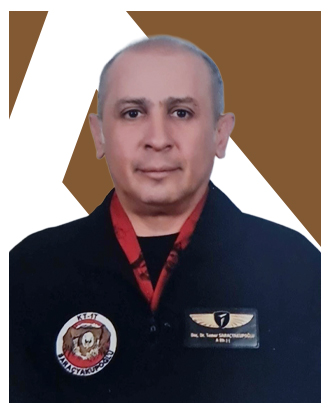
Doç. Dr. Tamer SARAÇYAKUPOĞLU

Toprak Ozan MEMİŞ

Dr. Tuba KARAHAN
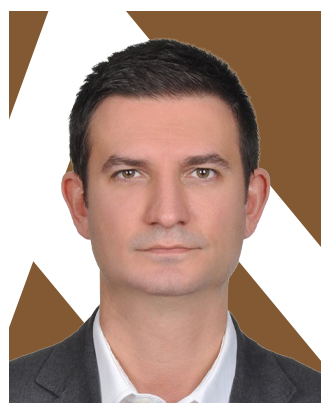
Erhan ÇİFTÇİ

Dr. Tevfik Berker KOÇAK
The purpose of this program is to provide participants with an understanding of the thermal, electrical, and electromagnetic effects caused by lightning strikes on aircraft structures, and to equip them with a holistic engineering perspective on the design, analysis, and testing of lightning protection systems.
The purpose of this program is to provide participants with an understanding of the thermal, electrical, and electromagnetic effects caused by lightning strikes on aircraft structures, and to equip them with a holistic engineering perspective on the design, analysis, and testing of lightning protection systems.
By the end of the program, participants will be able to evaluate the lightning resistance of both metallic and composite structures and apply design requirements, material selection, and testing criteria within a comprehensive systems engineering framework.
By the end of the program, participants will be able to:
The purpose of this program is to provide participants with the knowledge and skills necessary to design tooling (jigs, fixtures, molds, apparatus, etc.) used in the manufacturing processes of aviation structures according to engineering principles.
The purpose of this program is to provide participants with the knowledge and skills necessary to design tooling (jigs, fixtures, molds, apparatus, etc.) used in the manufacturing processes of aviation structures according to engineering principles.
Participants will learn tooling design principles for sheet metal, composite, and assembly operations within the framework of tolerance transfer, ergonomics, safety, and accuracy requirements. By the end of the program, they will be able to achieve tooling designs that increase the efficiency of production processes, are maintenance-friendly, and comply with quality requirements.
By the end of the program, participants will be able to:
The purpose of this program is to provide participants with the fundamental engineering principles used in the design of aircraft structural components and to develop the skill to create designs that are manufacturable, reliable, and compliant with certification requirements.
The purpose of this program is to provide participants with the fundamental engineering principles used in the design of aircraft structural components and to develop the skill to create designs that are manufacturable, reliable, and compliant with certification requirements.
Participants will gain a systematic approach to topics such as geometric modeling, transforming functional requirements into designs, material selection, design verification, and change management.
By the end of the program, participants will be able to:
The purpose of this program is to provide the fundamental engineering knowledge necessary to analyze the load-carrying capacity, durability, and safety of aircraft structural components.
The purpose of this program is to provide the fundamental engineering knowledge necessary to analyze the load-carrying capacity, durability, and safety of aircraft structural components.
Participants will learn the basic analysis methods, load types, and boundary conditions used in aircraft structures, and become capable of performing the necessary calculations for safe design and verification of structural elements.
By the end of the program, a fundamental engineering perspective for applying both analytical and numerical analysis approaches will be gained.
By the end of the program, participants will be able to:
The purpose of this program is to teach the engineering principles used in the assembly process of aircraft structural components and to provide participants with the ability to analyze the impact of assembly on design.
The purpose of this program is to teach the engineering principles used in the assembly process of aircraft structural components and to provide participants with the ability to analyze the impact of assembly on design.
Participants will learn to anticipate tolerance, alignment, connection, and ergonomics problems that arise during assembly, and to make design decisions that enhance manufacturability and quality.
The program comprehensively addresses Design for Assembly (DFA) and Design for Manufacturing (DFM) principles through application examples in aviation structures.
By the end of the program, participants will be able to:
The purpose of this program is to provide participants with advanced repair design knowledge and skills for properly analyzing damage occurring in aircraft structures, maintaining structural integrity, and designing appropriate repair solutions.
The purpose of this program is to provide participants with advanced repair design knowledge and skills for properly analyzing damage occurring in aircraft structures, maintaining structural integrity, and designing appropriate repair solutions. The program aims to teach repair principles, analysis methods, and certification requirements applicable to both metallic and composite structures through a comprehensive approach.
Participants will be able to evaluate damage types encountered in actual aircraft components, select appropriate repair methods, and prepare engineering documentation in accordance with international standards.
By the end of the program, participants will be able to:
The purpose of this program is to teach participants the fundamental principles, symbols, tolerance zones, and measurement methods of the Geometric Dimensioning and Tolerancing (GD&T) system at an advanced level.
The purpose of this program is to teach participants the fundamental principles, symbols, tolerance zones, and measurement methods of the Geometric Dimensioning and Tolerancing (GD&T) system at an advanced level.
Participants will gain competence in expressing dimensional accuracy, geometric integrity, and functional suitability in technical drawings in accordance with ASME Y14.5 and ISO 1101 standards.
By the end of the program, engineers will be able to speak the same language in the design–manufacturing–measurement chain and integrate tolerance knowledge into the product life cycle.
By the end of the program, participants will be able to:
The purpose of this program is to teach the mechanisms, analysis methods, and preventive design strategies for fatigue and impact damage that occur over time or as a result of sudden loads in aircraft structures.
The purpose of this program is to teach the mechanisms, analysis methods, and preventive design strategies for fatigue and impact damage that occur over time or as a result of sudden loads in aircraft structures.
Participants will be able to analyze fatigue behavior in different material types (metallic and composite), the effects of impact loads, and their consequences on structural integrity.
By the end of the program, engineers will gain an application-oriented engineering perspective on damage detection, life prediction, and damage tolerance.
By the end of the program, participants will be able to:
The purpose of this program is to provide participants with advanced engineering knowledge on the design, manufacturing, and application techniques of thermoplastic composite materials in aviation structures.
The purpose of this program is to provide participants with advanced engineering knowledge on the design, manufacturing, and application techniques of thermoplastic composite materials in aviation structures.
Participants will gain knowledge about the mechanical, thermal, and environmental properties of thermoplastics, as well as manufacturing and assembly techniques with these materials, enabling them to develop lightweight, recyclable, and rapidly manufacturable structural solutions for the future.
By the end of the program, engineers will be able to manage the integration of thermoplastics into design, manufacturing, and analysis processes.
By the end of the program, participants will be able to:
The purpose of this program is to provide participants with current and practice-oriented knowledge about innovative composite materials, advanced manufacturing technologies, and lightweight structural design concepts used in aviation.
The purpose of this program is to provide participants with current and practice-oriented knowledge about innovative composite materials, advanced manufacturing technologies, and lightweight structural design concepts used in aviation.
Participants will evaluate from an engineering perspective how high-performance fiber-reinforced polymers, nano and hybrid composites, and automated manufacturing technologies are revolutionizing aircraft structures.
By the end of the program, knowledge-level proficiency will be achieved in managing the integration of next-generation composites into design, manufacturing, and analysis processes.
By the end of the program, participants will be able to:
The purpose of this program is to provide participants with advanced knowledge about ice formation on aircraft surfaces, its effects, and prevention systems.
The purpose of this program is to provide participants with advanced knowledge about ice formation on aircraft surfaces, its effects, and prevention systems.
Participants will learn the effects of icing on aerodynamic performance, structural durability, and flight safety, and will understand passive and active ice prevention technologies along with their engineering foundations.
By the end of the program, participants will be able to make technical decisions in icing analysis, system selection, and design verification processes.
By the end of the program, participants will be able to:
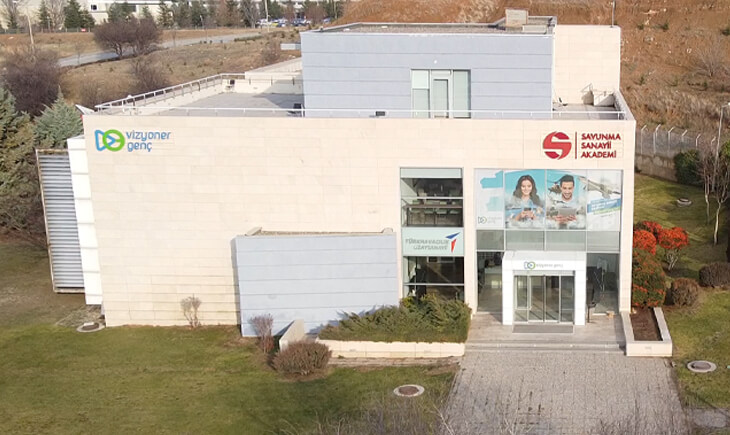
Savunma Sanayii Akademi
Üniversiteler Mahallesi ODTÜ TEKNOKENT, 06800, Çankaya/Ankara/Türkiye
+90 312 424 19 62
akademi@ssb.gov.tr